Catimor Coffee Beans
Catimor coffee beans come from a compact, high-yield arabica bred specifically to sustain against coffee leaf rust.
The catimor green coffee bean is pretty commercially successful and resilient despite it’s anonymity amongst many coffee drinkers.
Some catimor coffee context….
A few years back, I found myself more drawn to the pecan nut after uncovering the historical significance of the crop while conducting market research.
* Note: Please watch THIS DOCUMENTARY on the pecan crop and it’s American history in the Deep South if you have time.
This attraction to crops felt like an anomaly until I found myself diving into the book, Coffee: From Bean To Barista by Robert W. Thurston recently.
There clearly is a strong link between environmental justice and modern agricultural commerce. Places like the Himalayas can leverage the demand for single-origin coffee to create premium value.
A steady flow of commerce between international markets for green coffee beans is becoming a large contributor to struggling economies working to sustain higher standards of living for the residents.
The Tree
Catimor is a cross between Caturra (a naturally dwarfed arabica mutation) and Hibrido de Timor, a spontaneous arabica-robusta hybrid discovered on the island of Timor in the 1920s.
The catimor plant inherited :
- Compact growth — short stature allows planting at roughly 3,000 trees per hectare, versus lower densities for taller heirloom varieties
- Rust resistance — carried over from the robusta side of Hibrido de Timor, this is Catimor’s defining trait
- Bronze-tipped new leaves
- High yield — Colombia’s CENICAFE records that Catimor produces 30–50% more than other arabica varieties
- Lower ideal altitude — Catimor generally performs best better lower, contrary to most arabaica
Flavor of Catimor Coffee Beans
While this coffee bean can be designed for inconsistent flavor, altitude plays a strong role in the actual taste of the Catimor beans.
Be mindful of flash roasting, as this particular type of coffee bean is best suited to benefit from the “Maillard” phase of roasting.
- Lower altitude (roughly 600–1,000m): flatter, earthier, nuttier, heavier body, less acidity
- Higher altitude (1,200m+): brighter citrus acidity, cleaner sweetness, more floral lift
- General profile at its best: medium-to-full body, balanced acidity, notes ranging through citrus, stone fruit, and cocoa/dark chocolate on the finish
- Processing matters as much as origin — washed lots tend toward cleaner citrus and lighter body; honey and natural processing push more sweetness and fruit intensity
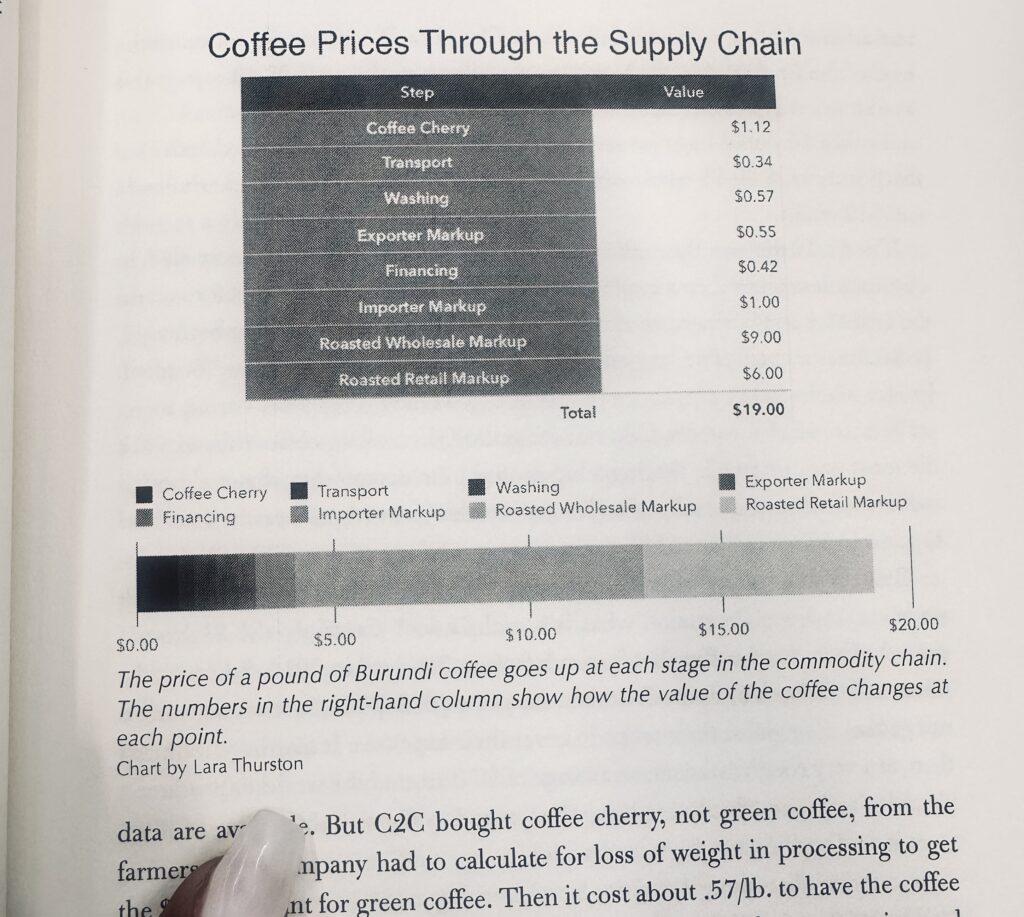
Manufacturing Notes
Examining the commerce profile of the Catimor green coffee bean will help provide more product clarity and assist with operating decisions.
For a manufacturer or co-packer sourcing higher volume, Catimor is a reliable, versatile choice.
Recent news on coffee the commodity.
In March 2026 , Reuters.com reported on the commodity coffee market going into a downturn after arabica recorded high prices in February 2025.
The article went on to compare coffee to cocoa circa 2024 during it’s 70% drop in value a year later.
An abundance in ICE exchange arabica export from Brazil to a guaranteed buyer is now the most recent predictor of this expected “downturn/crash” of commodity coffee rates.
Regional Suppliers of Catimor Green Coffee Beans
| Region | Notes for buyers |
|---|---|
| Vietnam (Central Highlands, Dak Lak, Lam Dong, Son La) | Dominant arabica variety in northwestern Vietnam — accounts for the large majority of arabica plantings there; typically lower elevation, expect nuttier/earthier lots |
| Brazil (Minas Gerais, Rondônia) | Home of the original IAC breeding program (1970s); look for named lines like Catimor 5468 or 6857 |
| Colombia (Huila, Cauca, Tolima) | Often sold under related names (the “Colombia” variety is itself an F5 Catimor selection); higher-altitude lots can perform well in the cup |
| Central America (Costa Rica – Tarrazú; Honduras) | Regional selections such as IHCAFE-90 and Lempira are Catimor-lineage crosses bred locally for rust resistance |
| Indonesia (Aceh, Gayo, Mandheling) | Grown under local names like Ateng-Jaluk; expect Catimor genetics folded into regional lot blends rather than sold as a standalone varietal |
| India | Released commercially as Cauvery through the national coffee research institute |
| Timor-Leste | Birthplace of the parent Hibrido de Timor; still a producer, though smaller in global export volume |

Hey. I’m Jamie Freya, a human/entrepreneur raised in the Midwest, but currently based in Arizona. Various projects in design, web publishing, and consulting since 2019. Worker-owner in Pecan Milk Cooperative since 2021. Go Bears!